
‘Welcome! The world may feel unstable, but God’s truth remains firm. We’re glad you’re here.” This is a place for those who know the world is broken and still believe redemption is possible. If you’re weary from the weight of life, you’re among people who understand and a God who restores.
‘Greetings, friends! Be wary of this truth. It might not be the same as what you have learned. You have one trip through our time here, so consider whether the truth is truly important or if you would rather waste your time from renewing knowledge, or simply follow the path Satan has set up for lies.
Faithful pastors, teachers, and churches may hold differing views on giving and stewardship. This material does not question anyone’s sincerity or heart for God, but rather seeks to distinguish biblical instruction from human tradition, in the spirit of love and truth.
Readers are encouraged to approach this subject with humility, patience, and a Berean heart—searching the Scriptures daily to see whether these things are so. Let every conversation be seasoned with grace, and let love for Christ and His “Holy Spirit” guide all discussion towards Truth.
If giving is demanded, it is no longer biblical. If fear is used, it is no longer God’s way. Christ did not free us from the Law to place us under financial bondage to men. ‘Lets, learn something today. So lets get this started…
The KJV of our Bible, doesn’t have many direct commands to “give tithes to the church,” as tithing was an Old Testament Temple system; rather, the New Testament emphasizes generous, cheerful giving for the Lord’s work (2 Corinthians 9:7).
With Jesus affirming tithing under the Law (Matthew 23:23) while focusing on justice, mercy, and faith, and the Old Testament (Leviticus 27:30, Malachi 3:10) details tithing produce for Levites and feasts, not modern “church” buildings/pastors.
Key Scriptures & Context:
(Malachi 3:10); “Bring ye all the tithes into the storehouse, that there may be meat in mine house, and prove me now herewith, saith the LORD of hosts, if I will not open you the windows of heaven, and pour you out a blessing…” (This refers to the Temple storehouse).
(Matthew 23:23); “Woe unto you, scribes and Pharisees, hypocrites! for ye pay tithe of mint and anise and cummin, and have omitted the weightier matters of the law, judgment, mercy, and faith: these ought ye to have done, and not to leave the other undone.” (Jesus affirms tithing as part of the Law but emphasizes deeper spiritual duties).
(Leviticus 27:30); “And all the tithe of the land, whether of the seed of the land, or of the fruit of the tree, is the LORD’s; it is holy unto the LORD.” (Defines the tithe as God’s, from agricultural yield).
(2 Corinthians 9:7); “Every man according to his purpose in his heart, so let him give; not grudgingly, or of necessity; for God loveth a cheerful giver.” (Shifts focus to voluntary, joyful giving for the New Covenant).
What Tithing Was in the Old Testament:
Tithing was part of Israel’s theocratic law, tied directly to the Temple system, not a church model. “And that we should bring the firstfruits of our dough, and our offerings… unto the chambers of the house of our God; and the tithes of our ground unto the Levites.” (Nehemiah 10:37).
Key facts:
- Tithes were agricultural produce, not wages.
- They supported Levites, who owned no land.
- They funded Temple service and feasts.
- They were stored in Temple chambers, not given to pastors.
‘Friends, there was no paid clergy class accumulating wealth through tithes. In a neighborhood church it can be understood to help cheerfully, to keep electric and water on, and to give “Ecclesiastical stipend” to a pastor to come in and let the “Holy Spirit,” lead his sermon. But understand you are not under orders of 10% of your wages to buy them a house, a car, and give them more money then you have.
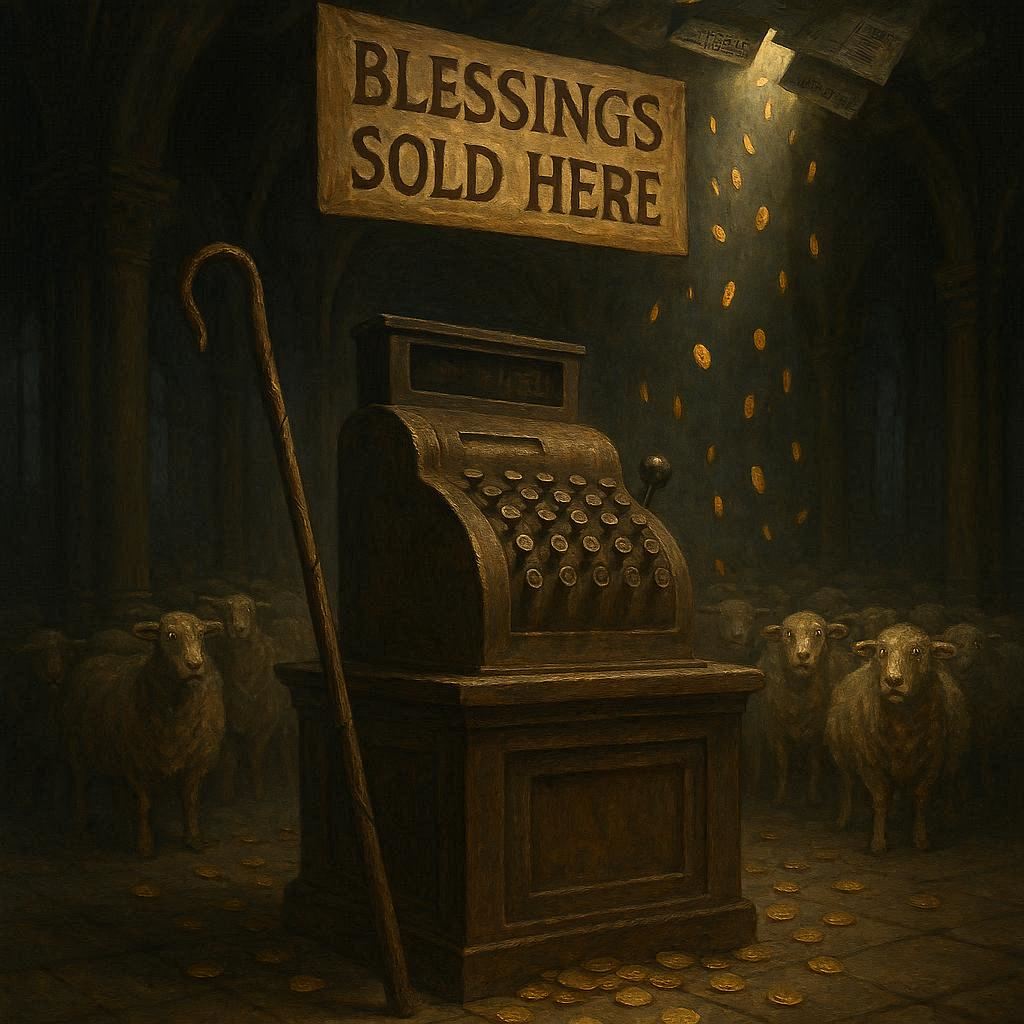
That’s not need it’s what has created greed amongst men of pulpits, they should get a job and stop stealing from God’s children, they are hungry wolves in sheep clothing. If your pastor argues, show him this message, I’m sure it’s better than his. I have God’s word to back me up, not men’s traditions. “God forbid; yea, let God be true, but every man a liar; as it is written-(Romans 3:4).
What Changed After Christ:
The Temple system ended. The Levitical priesthood ended. Christ became the High Priest forever. The New Testament never commands believers to tithe to a church organization. Instead, it teaches free will, cheerful giving:
“Every man according as he purposeth in his heart, so let him give; not grudgingly, or of necessity; for God loveth a cheerful giver.” (2 Corinthians 9:7). Notice:
- No percentage commanded.
- No coercion.
- No threat of curse.
- No institutional demand.
Giving is voluntary, personal, and Spirit-led. Not pastor fed, let him get a job the same as you do, these temples (Churches) are different then the Levites biblical times.
If he wants it like that then give him a bag of potatoes and some fruit after his sermon, then make sure he sweeps up before he leaves. You will save and have more money for what you need safely away from their greed.
Key Difference: Old vs. New Testament:
Old Testament (Law): A mandatory system for supporting the Levites, priests, and Temple services, primarily in agricultural produce. New Testament (Grace): Encourages generous, sacrificial, joyful giving (often called offerings or sowing) as a result of God’s grace, rather than a strict percentage command to a building or specific entity.
While many Christians today give a tithe (10%) of gross to their local church as an act of stewardship and support for ministry, the direct instruction to give specifically to the modern church
building/institution isn’t as explicit as the Old Testament laws for the Temple.
Jesus’ Warning About Religious Abuse:
Jesus rebuked leaders who used religious rules to burden people while enriching themselves, as most of those on your TVs. “Woe unto you, scribes and Pharisees, hypocrites!” Today’s preaching often features the “prosperity gospel,” a belief that God rewards faithful Christians with financial wealth, health, and success.
Teaching that faith and giving directly leads to material blessings, a message popular in some American evangelical circles but criticized for focusing on earthly gain over spiritual depth and for potentially misleading followers, with dollar figures like most you see on our TV networks being the prominent proponents.
This “word of faith” movement suggests poverty is a sign of lacking faith, while offering “keys” to abundance, most times for a price, contrasting sharply with traditional teachings on suffering and spiritual focus. The issue was not giving—it was greed disguised as holiness.
The Biblical Bottom Line:
- Tithing was Old Covenant law, tied to the Temple.
- The New Covenant teaches generosity, not taxation, or cost of admission.
- Giving should support real need, ministry, and mercy.
- Any system that demands 10% wages, is not endorsed with New Testament authority.
God never intended His children to be pressured, shamed, or financially controlled by greedy men and their theology schools, that train to set-up like “7 elevens,” on every corner, so they can make merchandise out of God’s Words! They opened their doors to the spirits of the world.
The Spirit of God vs. Worldly Spirit (1 Corinthians 2:12); The Holy Spirit teaches spiritual truths, which the “natural man” (guided by the spirit of the world) cannot understand.
Testing Spirits; Believers are told to “try the spirits whether they are of God,” distinguishing God’s Spirit from false prophets by whether they confess Jesus Christ came in the flesh ((1 John 4:1-3). Some say God, but don’t really know God!
More In Depth:
There are zero scriptures in the King James Version or should in any other use the specific phrase “give tithes to the church”. While the Bible contains many instructions regarding tithes, the terminology and context vary based on whether the scripture is in the Old or New Testament.
- Key Terminology Differences:
A) “Church”; The word “church” appears 80 times in the Bible, but only in the New Testament (starting at Matthew 16:18). But it is used an additional 36 or 37 times, for a combined total of roughly 117 occurrences old and new.
B) “Tithes”: Most tithing instructions in the KJV are located in the Old Testament and refer to giving to the levites, the temple, or the storehouse rather than a “church”.
2. Tithing Locations in the Bible:
Instead of the “church,” the Bible specifies these locations for tithes:
- The Storehouse: “Bring ye all the tithes into the storehouse, that there may be meat in mine house…” (Malachi 3:10).
- The Levites: “And, behold, I have given the children of Levi all the tenth in Israel for an inheritance…” (Numbers 18:21).
- The Temple: Tithes were brought to the “house of our God” and “the chambers of the house of our God” (Nehemiah 10:37–38).
3. Tithing in the New Testament:
The word “tithe” or “tithing” appears only a few times in the New Testament of the Bible, but never as a direct command to give to a local church; (Matthew 23:23 & Luke 11:42); Jesus rebukes Pharisees for tithing small herbs while neglecting “judgment, mercy, and faith”.
(Luke 18:12); A Pharisee boasts, “I give tithes of all that I possess.” (Hebrews 7:1–10); Refers to the historical tithe Abraham gave to King Melchizedek after his victory over kings.
Instead of a mandated percentage called a “tithe” to the church, New Testament writers emphasize generous and cheerful giving (2 Corinthians 9:7) and regular collections for those in need (1 Corinthians 16:2), not a pastors greed!
Authors Note/And Closing Truth:
‘Friends, if a church teaches giving as obedience to God, it must also teach freedom in Christ. If giving is demanded, measured, or enforced, it is no longer biblical—it is institutional. God wants the heart, not a $$$ quota.
This essay is written to awaken discernment, not stir rebellion. Scripture repeatedly warns God’s people against those who use religious authority to enrich themselves while claiming divine approval. Giving that is coerced, demanded, or enforced through fear is not obedience—it is exploitation.
The Bible never commands believers to surrender their livelihood to men who promise blessing in exchange for payment. God does not operate a protection racket, nor does He outsource His provision to spiritual middlemen. When leaders demand money while silencing questions, refusing transparency, and living above the people they serve, wisdom, not guilt—must govern your response.
Jesus warned of wolves disguised as shepherds, not criminals in the open. Thieves do not always steal by force; many steal by persuasion, tradition, and misuse of Scripture. God’s people are called to be generous—but never foolish, fearful, or financially enslaved.
“Brothers and Sisters.” Give freely. Give wisely. And never confuse man’s appetite with God’s will. Thanks, for visiting and I hope you understood our Fathers message and protection today. God bless. Amen!
Author and Servant;
Norman G. Roy III
3 Biblical Secrets of Tithing That Your Church Did NOT Teach You – Manipulation or Obligation?